

Jump to a Category
Cloud marketplaces have become a core part of software sales, but listings alone don’t drive growth. The most successful companies combine Marketplace transactions with cloud co-selling to reach new buyers, accelerate deals, and strengthen cloud provider relationships. A strong ISV cloud strategy connects these motions into a repeatable Cloud GTM engine that scales revenue over time.
This playbook covers how alliance leaders can build an effective ISV co-sell strategy, align with AWS, Microsoft, and Google Cloud programs, and create a foundation for long-term growth.
Key takeaways
- Cloud co-selling helps ISVs access new buyers, cloud budgets, and sales opportunities.
- A successful ISV cloud strategy combines Marketplace and co-sell motions rather than treating them separately.
- Data-driven account targeting improves co-sell efficiency and helps teams prioritize the right opportunities.
- AWS, Microsoft, and Google Cloud each offer unique co-sell programs and incentives.
- The strongest co-sell program ISV teams build includes executive support, Marketplace readiness, and a clear “better together” story.
What is cloud co-selling?
Cloud co-selling is a go-to-market motion where an ISV and a cloud provider work together to identify, support, and close customer opportunities.
Unlike traditional referrals, co-selling involves active collaboration between cloud sales teams and ISVs. The goal is simple: help customers solve business challenges while creating value for both the software provider and the cloud provider.
For ISVs, cloud co-selling can:
- Expand access to new accounts
- Accelerate sales cycles
- Unlock cloud-funded opportunities
- Increase Marketplace adoption
- Strengthen cloud provider relationships
When paired with Marketplace transactions, co-selling becomes one of the most effective ways to scale an ISV cloud strategy and drive long-term Cloud GTM success.
Why is cloud co-selling critical to an ISV cloud strategy?
Today’s buyers want flexible procurement options, simpler vendor management, and ways to leverage existing cloud commitments. As a result, cloud providers continue to invest heavily in partner ecosystems and Marketplace programs.
This shift has made cloud co-selling a key component of modern Cloud GTM.
When Marketplace and co-sell work together, they create a growth flywheel that helps software companies:
- Identify Marketplace-ready buyers
- Align with cloud provider sales teams
- Accelerate procurement
- Access committed cloud spend
- Generate more cloud-driven revenue
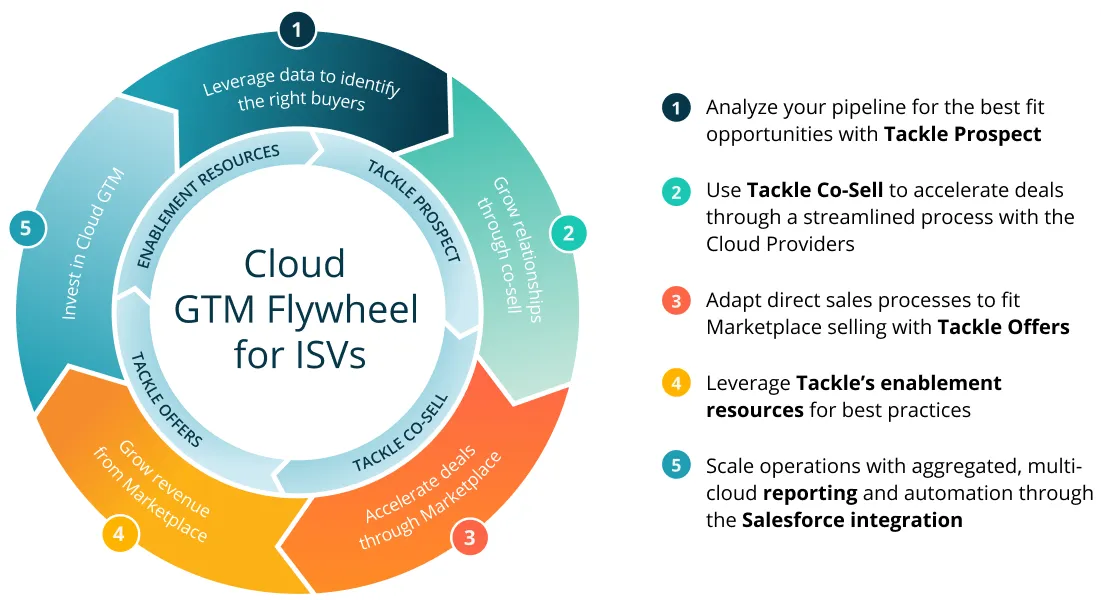
Many of the highest-performing software companies no longer view Marketplace as a standalone sales channel. Instead, they integrate Marketplace, co-selling, and ecosystem partnerships into a broader ISV cloud strategy designed to support revenue growth.
This approach is especially important as more organizations look to maximize committed cloud spend agreements. Buyers often have strong incentives to purchase through Marketplace, making cloud partnerships an increasingly important part of overall go-to-market execution.
For companies looking to expand Marketplace revenue, many of the same principles align with other ISV revenue growth strategies, including ecosystem alignment, operational efficiency, and customer-focused procurement experiences.
What are the pillars of a successful ISV co-sell strategy?
Successful cloud co-selling programs don’t happen by accident. The most effective alliance teams focus on four foundational areas.
1. Organizational buy-in
Co-selling requires alignment across sales, alliances, marketing, finance, operations, and leadership teams. Organizations that treat co-selling as a strategic growth initiative typically see stronger adoption and better results.
2. Data-driven targeting
One of the biggest mistakes ISVs make is registering every opportunity for co-sell. A successful co-sell program ISV teams can scale is built on identifying the right buyers, understanding cloud relationships, and prioritizing opportunities that are most likely to benefit from Marketplace and co-sell engagement.
3. A strong “better together” story
Cloud providers want to understand how your solution complements their platform. A compelling “better together” story clearly explains how your product helps customers achieve better outcomes while supporting cloud adoption.
4. Marketplace readiness
Marketplace and co-selling are most effective when they work together. Ensuring your listings, private offer processes, and procurement workflows are optimized helps sellers move opportunities through the buying process faster.

What are the best practices for co-selling with AWS, Microsoft, and Google Cloud?
A successful ISV cloud strategy should align closely with the cloud ecosystems where your customers already operate. While AWS, Microsoft, and Google Cloud each have unique partner programs, the foundation of every successful ISV co-sell strategy remains the same: help customers solve problems, help cloud providers drive adoption, and create a repeatable framework for growth.
AWS
AWS co-selling is centered around the AWS Partner Network (APN) and the APN Customer Engagement (ACE) program, which enables partners to share opportunities and collaborate directly with AWS sellers.
For many organizations, AWS Marketplace and ACE are foundational components of a broader cloud co-selling motion because they create opportunities to engage AWS stakeholders throughout the sales cycle.
To maximize AWS co-sell success:
- Build a clear “better together” story that demonstrates customer value.
- Maintain clean, accurate opportunity data in ACE.
- Identify opportunities that align with AWS consumption goals.
- Regularly engage AWS stakeholders through account mapping and pipeline reviews.
As AWS continues to evolve programs like the AWS ISV Partner Path, partners that demonstrate consistent Marketplace success and strong customer outcomes are often better positioned to scale their co-sell program ISV teams rely on to generate pipeline.
Microsoft
Microsoft’s co-sell motion revolves around Partner Center, Marketplace, and partner designations such as IP Co-sell eligibility.
For many enterprise customers, Marketplace purchases can contribute toward Microsoft Azure Consumption Commitment (MACC) agreements, creating a strong incentive to transact through the Microsoft commercial marketplace. This makes Microsoft an important channel within an ISV cloud strategy, particularly for organizations targeting enterprise buyers.
Best practices include:
- Keep co-sell referrals updated with detailed opportunity information.
- Clearly communicate business outcomes and customer value.
- Ensure Marketplace assets remain current and aligned with Microsoft’s positioning.
- Train sellers to articulate how your solution complements Microsoft technologies.
The strongest ISV co-sell strategy programs focus on helping Microsoft sellers understand exactly how their solution supports customer goals while contributing to broader cloud adoption initiatives.
Google Cloud
Google Cloud co-selling typically begins through Partner Advantage and strong collaboration with field teams.
Successful ISVs focus on:
- Building Marketplace transaction history.
- Sharing customer success stories.
- Establishing relationships with Google Cloud sellers.
- Creating a strong “better together” narrative tied to Google Cloud services.
As with AWS and Microsoft, successful cloud co-selling on Google Cloud requires consistent engagement, clear customer value, and a repeatable operating model. Companies that integrate Google Cloud into their broader ISV cloud strategy are often able to expand ecosystem influence and uncover new growth opportunities across their target accounts.
Getting started and optimizing your co-sell process
Building an effective ISV cloud strategy doesn’t require a massive team or years of experience with cloud ecosystems. Start with a focused approach, establish repeatable processes, and build momentum over time.
As you develop your ISV co-sell strategy, focus on these foundational steps:
- Select a primary cloud provider and learn its co-sell process before expanding across multiple ecosystems.
- Optimize your Marketplace presence and ensure listings are ready to support transactions.
- Develop a clear “better together” story that explains how your solution complements the cloud provider’s platform.
- Identify co-sell-ready opportunities within your existing pipeline.
- Create a consistent process for account mapping and partner engagement.
- Train sales and alliance teams on co-sell motions, Marketplace procurement, and cloud incentives.
- Track co-sell opportunities, referrals, and outcomes to improve performance over time.
To succeed with cloud co-selling, focus on quality over quantity. Rather than registering every deal, they prioritize opportunities where Marketplace, cloud budgets, and ecosystem relationships can create meaningful value for both the customer and the cloud provider.
Understanding how buyers leverage committed cloud spend agreements can also help teams identify higher-probability opportunities.
Perfect your cloud GTM strategy with Tackle
An ISV cloud strategy is only as strong as the systems behind it. While Marketplace listings and partner relationships can create new opportunities, success depends on knowing which buyers to target, which deals to prioritize, and how to operationalize co-sell across your revenue team.
That’s where Tackle comes in, helping ISVs connect Marketplace, buyer intent, and cloud co-selling into one scalable Cloud GTM motion. With the right data, workflows, and partner visibility, alliance teams can turn an ISV co-sell strategy into a repeatable path to pipeline and revenue.
Ready to turn your co-sell strategy into scalable Cloud GTM growth? Talk to a Tackler today.
Frequently asked questions
What is co-selling for ISVs?
Co-selling for ISVs is a sales motion where software vendors and cloud providers work together to identify, support, and close customer opportunities. As part of an ISV cloud strategy, cloud co-selling helps ISVs access new buyers, cloud budgets, and ecosystem relationships.
How does AWS co-sell work?
AWS co-sell operates through the AWS Partner Network (APN) and the APN Customer Engagement (ACE) program. Partners can share opportunities with AWS sellers, collaborate on deals, and align opportunities with AWS Marketplace and cloud consumption goals.
What’s the difference between co-sell and reselling?
In a co-sell motion, the ISV and cloud provider collaborate on a sales opportunity, but the ISV sells its own solution. In a reseller model, a third party purchases and resells the software directly to the customer.
How do ISVs get started with cloud co-selling?
ISVs can get started with cloud co-selling by establishing a Marketplace presence, creating a strong “better together” story, building relationships with cloud sales teams, and identifying co-sell-ready opportunities. A repeatable ISV co-sell strategy helps scale these efforts over time.